Pineapple leather already enjoys fashion industry fame as a planet- and cow-friendly alternative to animal skin. Now, pineapple wool has the potential to return this soft plant wool yarn to its glory days before the 19th century, when pineapple-derived fabric was exclusively for nobility, symbolising luxury and prestige.
Mass-producing and scaling pineapple fibre has previously proved challenging despite being a desirable material. But thanks to innovative and eco-friendly company Ananas Anam (the makers of Piñatex®), pineapple wool – brand name Piñayarn® – is poised to become a solid contender in the textiles arena.
Piñayarn® uses exclusive “Cottonisation” Technology to ensure uniform fineness, moisture control, and fibre length, allowing pineapple thread to be used as a spinning thread for textile production.
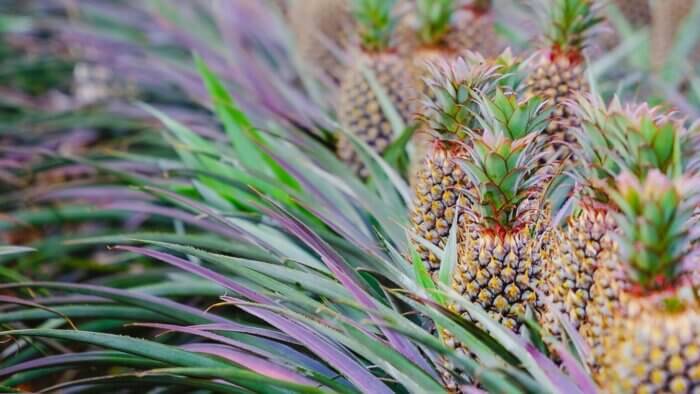
Because pineapple fibre yarn utilises the leaves of pineapple plants, which would otherwise be burnt after harvest, it diverts waste into a useful co-product of food production. This means no additional land use and, according to Ananas Anam, prevents the emission of up to 6 kilograms of CO2 per kilogram of Piñayarn®.
The resulting yarn has an irregular, fluffy texture. It can be coloured with the same dyes used on other plant-based fibres to cultivate a breathable, recyclable, petroleum-free, and biodegradable textile that’s captured the attention of forward-focussed designers like Stella McCartney.
Garments made from pineapple fibre boast many marketable qualities, like carrying a natural UPF 50+ rating and neutralising odours, including more than 90% of sweat odours.
Just as designers have embraced pineapple leather, pineapple wool is set to become a widely adopted sheep-free fabric for conscious consumers.
Read more: Discover Crop Plant Wools