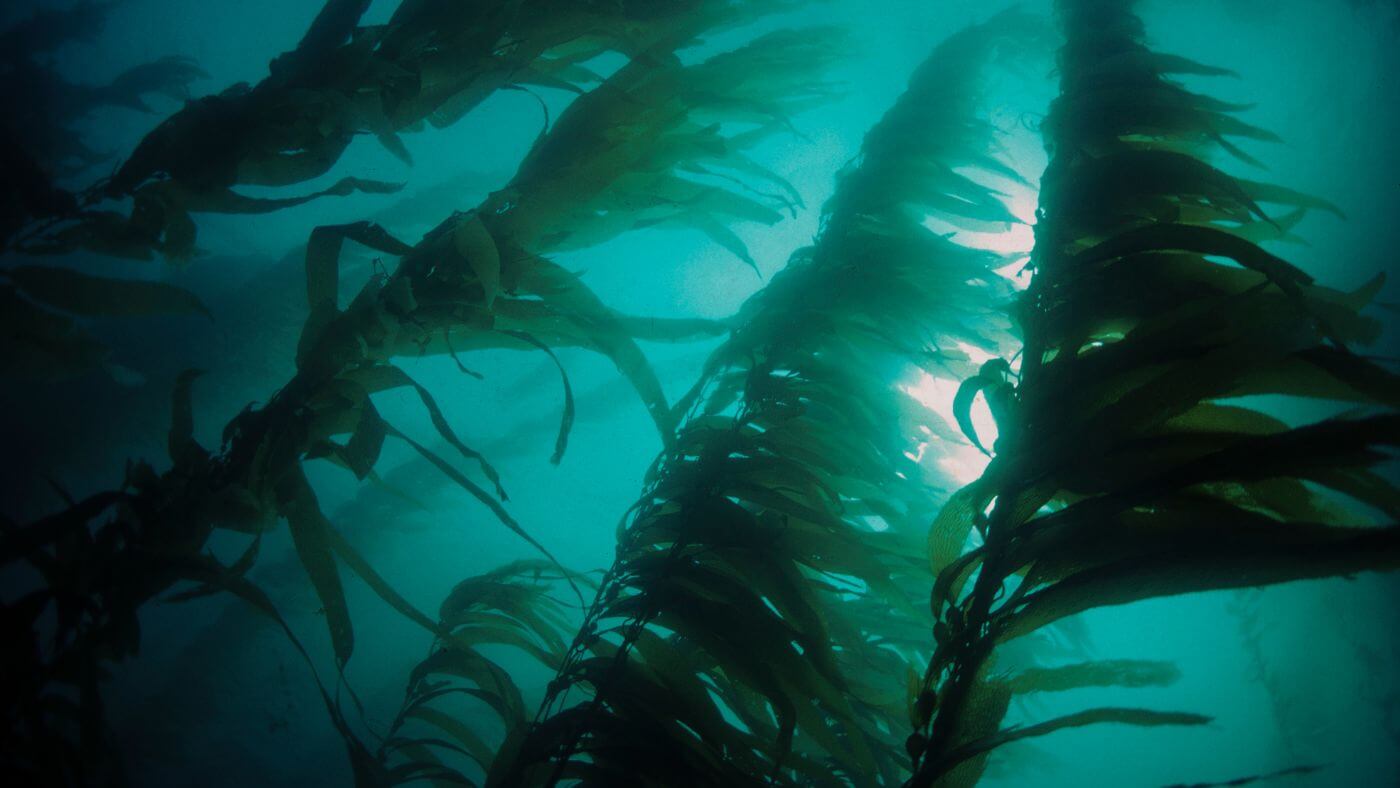
Seaweed is abundant and absorbs carbon dioxide in the ocean to survive, making it one of the planet’s most regenerative and environmentally helpful organisms. Long a superfood, textile innovators SeaCell™ are now combining Knotted Wrack seaweed from the fjords of Iceland with wood pulp to create a yarn with a breadth of qualities and variety of uses.
Technically speaking, SeaCell™ is a type of lyocell. To create the fibre, crushed seaweed is gently harvested every four years by pickers who leave the bottom of the plant intact, allowing for the regeneration period to begin immediately. The kelp is then combined with plant cells within an organic closed-loop system that prevents the release of solvents into the environment (as happens with viscose).
The Forest Stewardship Council recognises the solvent used in SeaCell™ production as non-toxic, while the location of the kelp keeps it pollutant-free.
The resulting plant wool yarn is buttery soft, biodegradable, and retains the seaweed’s natural moisturising and anti-inflammatory qualities. Because it can be made into fabrics that take on a stunning depth of colour, drape beautifully, and are soft, breathable, durable, and machine washable, it’s fast becoming a staple of designers.
Alexander Clementine uses SeaCell™ for its luxurious underwear, Lululemon has used a Seacell™-cotton blend called Vitasea™ in its range and Stella McCartney sent hand-crocheted garments made from Kelsun™ down the runway in 2024, to much buzz.
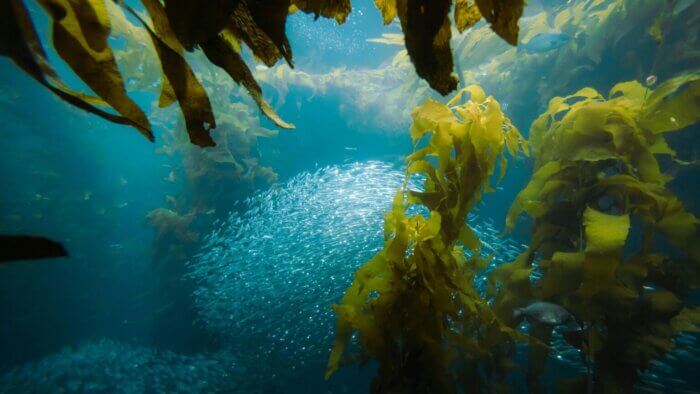
Seaweed can be used in knitted garments and, unlike animal agriculture, helps maintain the health of the oceans. In contrast, the farming of animals for their fleece contributes huge amounts of dangerous nitrous oxide to waterways, contributing to ocean dead zones.
Read more: Discover Emerging Plant Wools